No Results Found
The page you requested could not be found. Try refining your search, or use the navigation above to locate the post.
The latest round contributes to previous funding from pre-seed biotech investor biotope by VIB, and ocean-tech accelerator Sustainable Ocean Alliance (SOA), as well as private and public grants provided by the Research Council of Norway, Global Seaweed Coalition, Innovation Norway and the Eureka Network’s Eurostars programme.
The partnership with Faber and ICIG will empower the company to accelerate product development, swiftly meet industry demands, and initiate commercial production for corporate partners. Faber’s commitment to advancing ocean-based technologies makes them an ideal investment partner for B’ZEOS. In addition, the strategic collaboration with ICIG, a privately owned industrial group with an interest in biotechnology and novel materials, will enable B’ZEOS to fine tune its products and increase production by leveraging ICIG’s expertise in
compounds.
B’ZEOS’ seaweed-based solutions are not only fully bio-based and home-compostable but also compatible with existing packaging production lines. Seaweed’s rapid growth rate, ability to sequester CO2, and lack of dependence on land or fresh water, without releasing microplastics, make it an ideal raw material for sustainable packaging. The material’s versatility is complemented by B’ZEOS’ variety of applications, catering to a broad range of sectors and enabling the company to address diverse packaging needs while supporting corporate partners’ sustainability goals.
The viability and scalability of B’ZEOS’ packaging has been validated in five paid pilots to date, in collaboration with fellow Valley partners like Nestlé and other key industry players. B’ZEOS will participate in additional pilot schemes to further demonstrate the value of its solution, with the potential of reaching a test-shop with its partners.
“We’ve developed a truly sustainable seaweed-based packaging solution, derived from a variety of seaweed species. We’re not just focused on developing an eco-friendly solution; we are providing an industry-ready, scalable alternative for packaging manufacturers globally. Backed by strategic investors and leveraging our extensive experience in the packaging sector, B’ZEOS is poised to lead the way in transforming the industry with our innovative materials.” said Guy Maurice, Founder & SeaEO of B’ZEOS.
Rita Sousa, Partner at Faber added: “As global demand for sustainable packaging solutions accelerates, we’re excited to partner with B’ZEOS and support their mission of transforming the packaging industry at scale. Our investment aligns with our commitment to back ocean-based innovations that have the potential to drive positive environmental change and reshape industries for a
sustainable future”.
“B’ZEOS is pioneering an exceptional approach to sustainable materials, and we recognise that potential” said Dr. Pelin Yilmaz, Investment Director at ICIG Ventures. “Our partnership with B’ZEOS, complemented by the expertise of our compounding platform, allows us to transition towards fossil-free, compostable packaging. We were impressed by B’ZEOS’ tech-oriented team. Their industry expertise enables them to understand the sustainability needs and requirements of the packaging sector, creating solutions that are both robust and versatile.”
B’ZEOS is well positioned to transform the packaging industry with an innovative and truly sustainable alternative to traditional plastics, delivering the functionality of plastic without the environmental cost – offering a distinct advantage over existing bioplastics. Backed by strategic partnerships and new funding, B’ZEOS is set to expand its seaweed-based packaging, providing corporate partners with a scalable and impactful solution that will pave the way for a more sustainable future.
Founded in 2017, B’ZEOS is a European blue-tech company leading the way in sustainable packaging solutions made from seaweed.
B’ZEOS has developed a proprietary seaweed-based technology designed to replace fossil-based packaging. Their solutions are 100% bio-based, home-compostable, and compatible with existing packaging production lines.
B’ZEOS is committed to reducing plastic waste and advancing the circular economy by formulating innovative packaging solutions for various industries including food, cosmetics, and pharmaceuticals.
The page you requested could not be found. Try refining your search, or use the navigation above to locate the post.
“The Grain Innovation Center is the latest addition to Bühler’s expanding network of Application & Training Centers in Uzwil,” says Johannes Wick, CEO of Grains & Food at Bühler Group. “We cover the entire range of production, from various raw materials to a wide array of finished products. In doing so, we provide our customers with exceptional flexibility and the choices they need to address increasing challenges and revolutionize their markets.”
With changes in global grain supply chains, nutritional requirements, transparency of sourcing and pricing pressure, the milling industry faces a challenging environment. These include maintaining flour quality with variable raw materials, improving production and energy efficiency, managing safety issues, or finding and keeping well skilled professionals. Adopting new technologies – such as automation, IoT, and data analytics – and addressing environmental concerns add complexity, while growing consumer demand for healthier and more sustainable products has driven a faster pace of innovation.
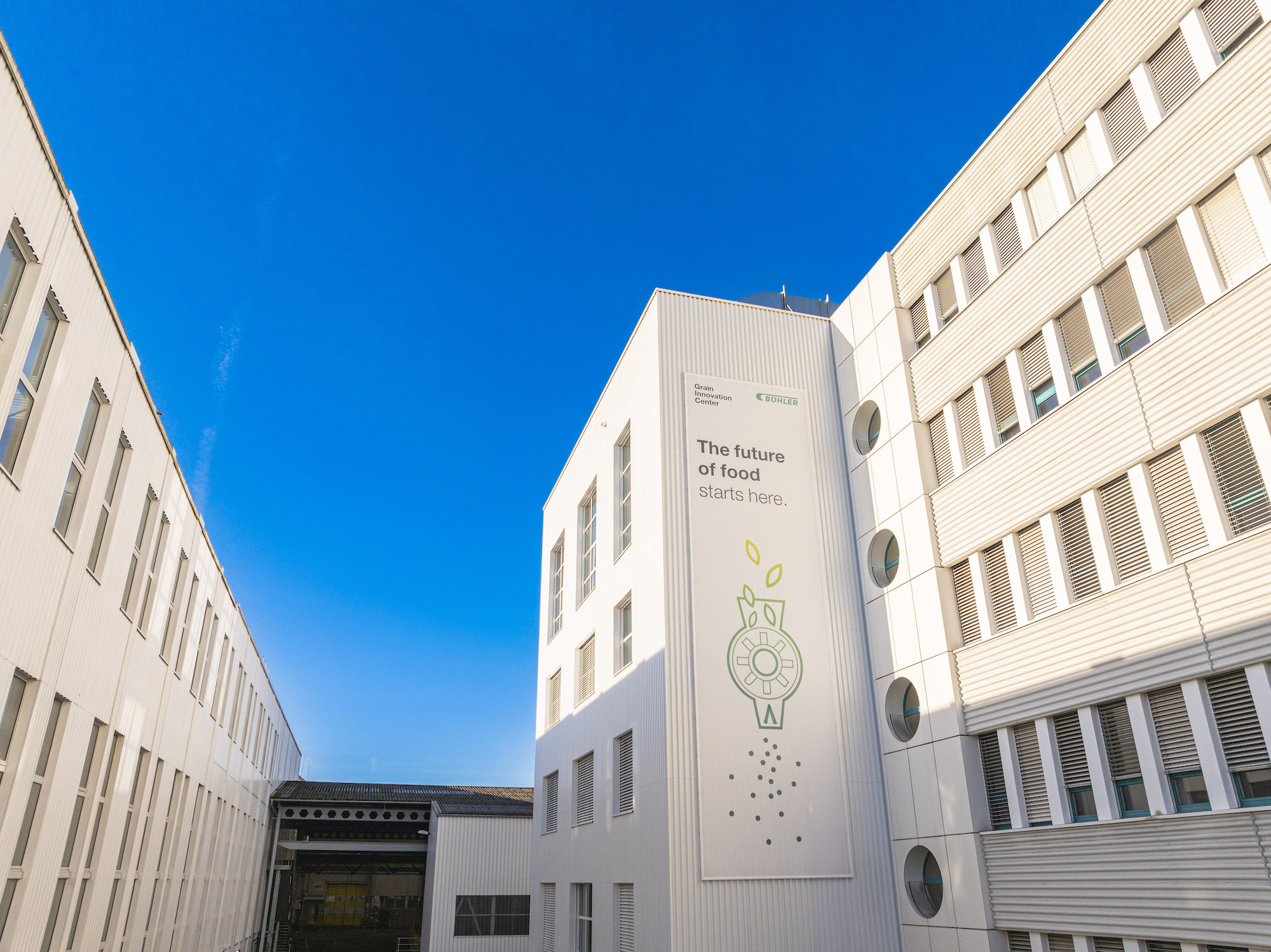
For this purpose, Bühler has designed a fresh, modern, and high-tech milling technology facility – the GIC. The new building is the successor to Bühler’s former Grain Technology Center, which has served the milling industry since 1951. The five-story facility spans 2,000 square meters and features state-of-the-art infrastructure along with over 70 pieces of cutting-edge equipment from Bühler and its partners. The GIC works as a leading-edge arena for customers to experiment, innovate, and find concrete solutions to meet their specific needs.
The GIC is equipped with the latest solutions and technologies for processing grain and pulses. Customers can conduct tests on food and animal feed and can develop new processes and solutions in various areas, including cleaning, optical sorting, grinding, sifting, mixing, protein shifting (a mechanical process that increases the protein concentration in plant-based raw materials). Additionally, they can work on hygienization and pelleting, as well as dehulling, peeling, and pearling of grains and pulses. “The GIC offers an unparalleled environment where customers can develop tailored processes and witness the extensive capabilities of Bühler’s diverse portfolio firsthand,” says Stefan Birrer, Head of Business Area Milling Solutions at Bühler. “The GIC is not just a facility, it’s a symbol of our commitment to helping customers succeed in an industry that is continuously evolving.”
Food trials encompass a variety of raw materials, including cereals, herbs, spices, and pulses. The GIC includes the technology and expertise to conduct trials on local and ancient grains – raw materials that can play a vital role in improving food security in many countries. Leveraging its extensive know-how in processing, the GIC also offers testing for various other commodities, including coffee, nuts, and insects. Additionally, the Application & Training Center caters to non-food bulk solids, such as plastics and absorbers.
Feed trials can be performed with production capacities of up to 5 tonnes per hour, covering the entire production line or individual process steps. “One of the main advantages of the GIC is its ability to provide not only detailed data that enable continuous and precise monitoring of the process but also the physical and chemical properties of the product at every stage of production and under different process conditions,” says Lothar Driller, Department Manager Feed Application Center and Trainings at Bühler.
The side streams generated by the GIC, such as wheat bran and rice husks, corn husk, pea hulls, and screenings from cleaning, will feed Bühler’s Energy Recovery Center, which provides heating for Bühler offices in Uzwil. Customers can also use this Center to explore the potential of utilizing side streams through energy recovery, which can lead to the reduction of their carbon footprint, waste, and energy costs.
The GIC is part of Bühler’s Application & Training Centers hub, which encompasses the four recently launched ATCs – Flavor Creation Center, Food Creation Center, Protein Application Center, and Energy Recovery Center – and other centers that have been in operation for several years, such as the Extrusion Application Center and Pasta Application Center.
With this innovation hub, Bühler can provide full, farm-to-fork coverage, encompassing entire value chains, an environment that is unique in the market. “Our broad business stretches across the entire protein value chain, and we have meticulously implemented a strategy for partnerships, closing internal gaps and enhancing material flow,” says Rudolf Hofer, Head of the Grain Innovation Center.
The modernization project also includes Bühler’s Milling Academy and the Swiss Institute of Feed Technology (SFT), both of which will be housed in a new structure strategically located next to the GIC to increase synergies. This new Milling Academy and the SFT facility will have classrooms, open learning areas, meeting rooms, a customer service corner, new laboratories, a workshop area, and a larger changing room for customers and employees.
The new building will enable Bühler’s team and customers to adapt and develop the skills needed to keep pace with a quickly changing and increasingly challenging work environment. About 1,000 customers and 150 internal employees were trained in more than 120 training courses offered by the Milling Academy and the Swiss Institute of Feed Technology in 2023. The new training facility is due to be operational by January 2025.
Bühler is driven by its purpose of creating innovations for a better world, balancing the needs of economy, humanity, and nature in all its decision-making processes. Billions of people come into contact with Bühler technologies as they cover their basic needs for food and mobility every day. Two billion people each day enjoy foods produced on Bühler equipment; and one billion people travel in vehicles manufactured using parts produced with Bühler solutions. Countless people wear eyeglasses, use smart phones, and read newspapers and magazines – all of which depend on Bühler process technologies and solutions. Having this global relevance, Bühler is in a unique position to turn today’s global challenges into sustainable business.
As a technology partner for the food, feed, and mobility industries, Bühler has committed to having solutions ready to multiply by 2025 that reduce energy, waste, and water by 50% in the value chains of its customers. It also proactively collaborates with suppliers to reduce climate impacts throughout the value chain. In its own operations, Bühler has developed a pathway to achieve a 60% reduction of greenhouse gas emissions by 2030 (Greenhouse Gas Protocol Scopes 1 & 2, against a 2019 baseline).
Bühler spends up to 5% of turnover on research and development annually to improve both the commercial and sustainability performance of its solutions, products, and services. In 2023, some 12,500 employees generated a turnover of CHF 3.0 billion. As a Swiss family-owned company with a history spanning 164 years, Bühler is active in 140 countries around the world and operates a global network of 105 service stations, 30 manufacturing sites, and Application & Training Centers in 25 locations.
The page you requested could not be found. Try refining your search, or use the navigation above to locate the post.
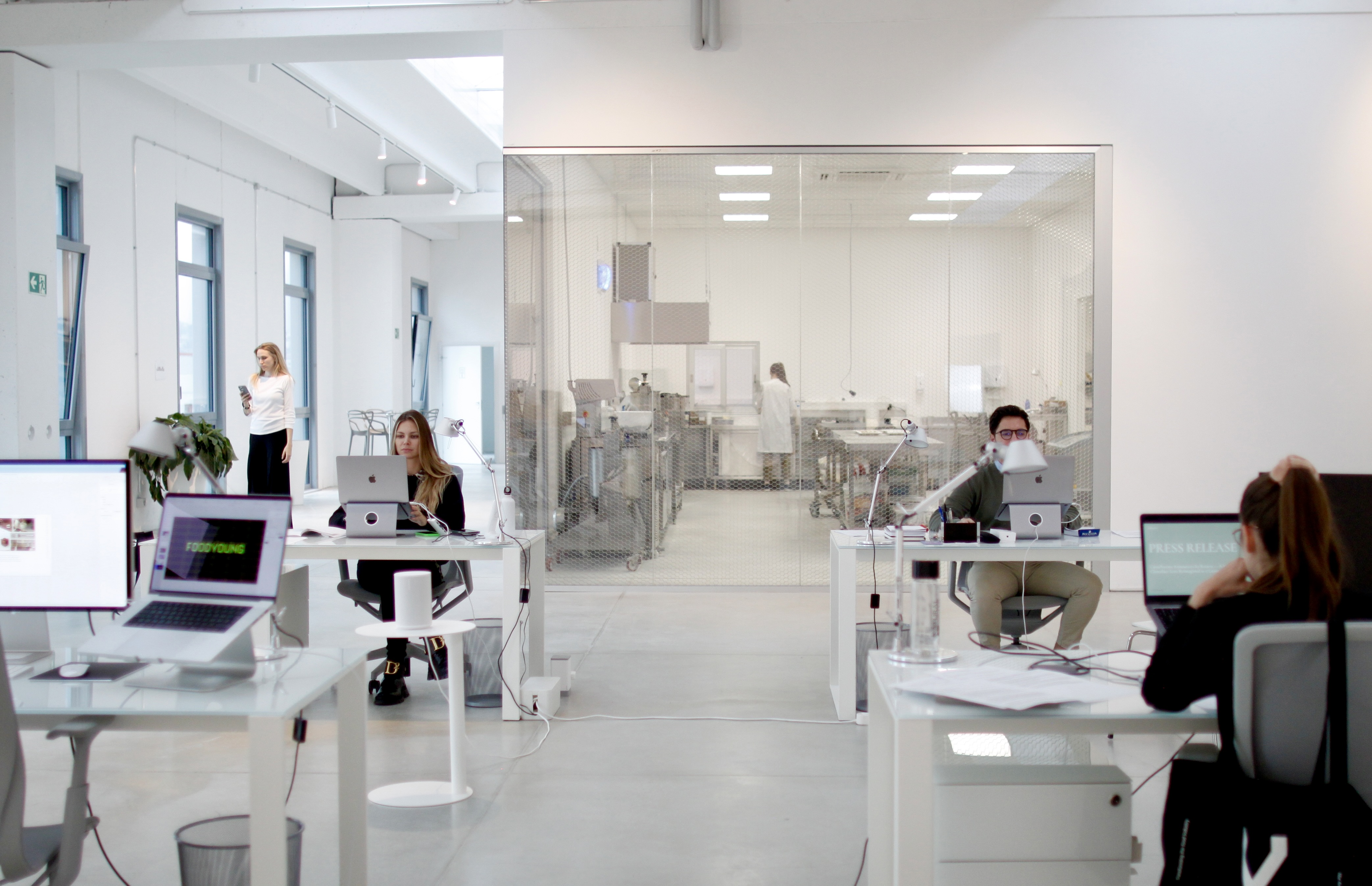
Located in the Italian-speaking part of Switzerland with close proximity to Italy’s renowned culinary culture, the Balerna facility offers end-to-end product development solutions under one roof. FoodYoung can develop, prototype, and scale products in just one to three months—far faster than the industry norm.
“Our new facility in Balerna is more than just a lab; it’s a platform for innovation where food science meets technology and culinary expertise,” shared Abouzar Rahmani, Founder and CEO of FoodYoung. “We believe that the future of food needs to be co-created, and this facility allows us to collaborate with startups, established companies, and entrepreneurs to create marketable solutions that are healthier, more sustainable, and taste exceptional.”
The Balerna facility is equipped to develop and produce a wide range of products across six categories, including frozen products such as ice cream and meals, baked goods, bars, various types of snacks, chocolates and spreads. FoodYoung is able to develop 1000+ prototypes per year and has a production capacity of 14+ million packs and 800+ tons of finished food products annually. Its comprehensive capabilities enable FoodYoung to serve not only its own portfolio ventures but also provide services to partners looking for faster, more agile product development processes.
FoodYoung stands out for its collaborative approach. The company partners with renowned retailers, influencers, and other innovators to co- create food ventures. By combining cutting-edge food science and technology with culinary mastery, FoodYoung is positioned to solve the food industry’s challenges collectively, rather than individually.
Founded by Abouzar Rahmani, a serial entrepreneur with deep roots in the agri-food industry, FoodYoung is supported by a highly skilled leadership team. Funda Dilmaghanian, Co-founder and Chief Operations Officer leads operational excellence, while Julia Rahmani as Co-founder and Chief Sustainability Officer heads sustainability initiatives, ensuring that the company’s practices align with its core values of health, taste, and sustainability.
“Our goal is to push the boundaries of what’s possible in food innovation,” added Rahmani. “We are not just creating products; we are reshaping the industry.”
The new Balerna facility encapsulates FoodYoung’s mission: to be a one stop shop where food innovation happens at record speed. From formulation and prototyping to pilot production and commercialization, the facility’s streamlined processes are designed to bring new products to market faster than traditional methods, run by an agile and forward- thinking team.
FoodYoung is a full-stack innovation lab and venture studio that combines food science, technology, and culinary expertise to create the next generation of sustainable, health-focused food products. Based in Balerna, Switzerland, FoodYoung offers end-to-end solutions, from formulation to scale production, across six product categories. With a commitment to collaboration, co-creation, and innovation, FoodYoung partners with startups, entrepreneurs, and established companies to bring breakthrough food products to market.
The page you requested could not be found. Try refining your search, or use the navigation above to locate the post.
The ZFV team believes that we can only achieve true change through collaboration. This is why the company is constantly on the lookout for new partnerships with future-focused startups. Read on to find out how Valley partners Steasy, FOOD2050, and Yumame have already benefited from their advice and support.
In its own restaurants, as well as in cafeterias and staff restaurants, ZFV’s focus is on balanced and climate-friendly food. Whether it’s through innovative recipes from ZFV’s own climate-friendly kitchen, totally new concepts like Flavour Kitchen or Green Kitchen Lab, or menus that feature more than 50% vegan and vegetarian offerings, ZFV relies first and foremost on diverse partnerships with innovative producers – like Valley partner Yumame Foods AG.
The startup produces delicious and sustainable food based on fungi and fermentation, with a strong focus on local and environmentally-friendly practices. These newcomers attracted the attention of ZFV’s F&B team, who were immediately enthused and impressed by its products. ZFV has now become Yumame’s first catering partner — and they’ve already dished up their first recipes in the Green Kitchen Lab at the University of Zurich. This includes the innovative “Farm to Table” research project, which ZFV developed together with the Zurich University School of Management and Law and Zurich University of the Arts, where Yumame was featured as an important part of the culinary offer.
ZFV values transparency about the effects of its food highly, and aims to inspire its guests with enthusiasm for an environmentally-friendly and balanced diet. Startup and Valley partner FOOD2050, founded in 2021, pursues the same aim. The company was in the process of developing a meal plan system and was looking for a partner that shared its values.
Won over by FOOD2050’s vision, ZFV became its strategic partner in 2021, and they jointly implemented the meal plan system for the first time at the University of Zurich in 2022. They continued to develop the concept together, creating a digital menu and meal plan that helps guests understand the the climate impact of their menus and food profiles that offer detailed information about individual dishes – right down to portraits of the producers who grew the ingredients. The solution was rolled out across 80 ZFV companies in 2023.
“Innovation means keeping one’s eyes open, constant scrutiny, actively engaging with one’s environment, personal development and also taking a chance now and then!” – Dario Notaro, CBDO ZFV
By investing in Steasy, a start-up that developed the first-ever mobile mini steamer, ZFV found a way to delight and serve those who don’t eat their lunch in cafeterias and staff restaurants. Thanks to an integrated battery, a pre-prepared menu can be quickly and gently heated — a total innovation with potential that was immediately obvious to the ZFV team. Today, they’re busy implementing a proof of concept for possible business cases that can leverage this exciting technology.
“High-quality, healthy and sustainable food should also be possible on the move, or in locations where it is not possible to eat in a restaurant,” – Dario Notaro, CBDO ZFV
ZFV’s partnerships help the company move closer to its vision of comprehensive meeting places that encompass six key dimensions – menu, people, physical space, virtual space, sustainability — and most importantly, the ZFV ecosystem, including partners like Steasy, FOOD2050 and Yumame.
Through its partnership with Valley, ZFV is eager to connect with even more Swiss food innovators. The team is currently developing a unique innovation infrastructure to further accelerate rapid market testing within the broader ZFV ecosystem.
The page you requested could not be found. Try refining your search, or use the navigation above to locate the post.
Five alternative protein start-ups from around the world will join Givaudan’s ‘Plant Attitude Challenge’ on April 17th and pitch how their solutions can decrease costs on one of their standard recipes by up to 20% while still ensuring a delicious and nutritious consumer experience.
Start-ups taking part in the Challenge will also articulate how they address the insights from Givaudan’s recent white paper with UC Berkeley: ‘10 Alternative Protein Pathways: Opportunities for Greater Efficiency.’
Challenge finalists include Eat Typcal (Brazil), Meatless Kingdom (Indonesia), Eternal (U.S.), Juicy Marbles (Slovenia), and BVeg Foods (India). These five companies will present their pitches at a live virtual event on April 17th, with both public and jury voting, and the winner will go on to collaborate with Givaudan on their innovation idea.
Flavio Garofalo, Global Director, Culinary & Plant Attitude, Givaudan, said: “We created the Plant Attitude Challenge to inspire companies to translate the 10 pathways from our recent white paper into cost effective alt-protein innovations that don’t compromise on all the things that delight consumers—including taste, mouthfeel, visual appeal and nutrition. We strongly believe that collaboration and strategic partnerships are key to success in alt-protein, and by teaming up to share knowledge, expertise and resources, we can innovate and get products to market more quickly.”
The winning start-up will collaborate with Givaudan, which offers a global ecosystem of protein hubs and alt-protein experts, as well as state-of-the art digital technologies and an integrated portfolio of solutions.
Expert jury members will include:
The live Plant Attitude Challenge event on April 17th is open to the public, and every participant will have an opportunity to vote for their favourite start-up innovation. Registerhere and download the white paper, ‘10 Alternative Protein Pathways: Opportunities for Greater Efficiency’ here.
Givaudan is a global leader in Fragrance & Beauty and Taste & Wellbeing. We celebrate the beauty of human experience by creating for happier, healthier lives with love for nature. Together with our customers we deliver food experiences, craft inspired fragrances and develop beauty and wellbeing solutions that make people look and feel good. In 2023, Givaudan employed 16,260 people worldwide and achieved CHF 6.9 billion in sales with a free cash flow of 13.3%. With a heritage that stretches back over 250 years, we are committed to driving long-term, purpose-led growth by improving people’s health and happiness and increasing our positive impact on nature. This is Givaudan. Human by nature. Discover more at www.givaudan.com
Powered by innovation and creativity, Givaudan Taste & Wellbeing aims to shape the future of food by becoming the co-creation partner of choice to its customers. Built on its global leadership position in flavours and taste, the Company goes beyond to create food experiences that do good and feel good, for body, mind and planet. With an expanded portfolio of products across flavours, taste, functional and nutritional solutions and a deep knowledge of the food ecosystem, Givaudan’s passion is to collaborate with customers and partners to develop game changing innovations in food and beverage. This is Givaudan. Human by nature. Learn more about how we are shaping the future of food at www.givaudan.com/taste-wellbeing
The page you requested could not be found. Try refining your search, or use the navigation above to locate the post.
Planted has crafted its first plant-based steak that oozes juiciness, tenderness and a rich distinctive umami flavour, all thanks to their cutting-edge fermentation process. True to the company’s philosophy created exclusively from natural ingredients including soya protein, rapeseed oil, bean and rice flours as well as a proprietary blend of microbial cultures, the steak is testament to sustainable culinary ingenuity. With high protein and fibre, essential micronutrients vitamin B12 and iron, it also has low saturated fats. planted.steak caters to the health-conscious palate and true foodies with a steak packed with juiciness, tenderness and taste.
The planted.steak is now available across European restaurants for diners to enjoy: In Switzerland, notable restaurants across the nation such as Gartenhof, Kronenhalle, Lindenhofkeller, StudioBellerive at AMERON Bellerive au Lac, NOA Restaurant Bern, Café de Prélaz and KJU have already added the steak to their menus; in Germany the steak is available at Tim Raue’s Michelin starred restaurant as well as Tim Mälzer’s Bullerei in Hamburg and in Austria, the famous burger chain, Le Burger, is offering planted.steak.
“Our planted.steak is designed to satisfy even the most discerning palate. It’s a true game changer, not only for us but also for the whole category,” said Lukas Böni, co-founder and member of the Executive Board of Planted. “No other plant-based steak on the market uses only natural ingredients, zero additives and displays features such as juiciness as well as tenderness. In the research and development process, we have worked with over 50 gastronomy professionals to achieve a steak that is literally unreal, in taste, texture, application and overall eating experience. We are very proud that so many restaurants have added it to their menus already.”
“Fulfilling very demanding culinary requirements, the planted.steak allows us chefs to focus on what we are best at: creating and sharing emotions.”, says Peter Schärer, Executive Head Chef of famous restaurant Kronenhalle in Zürich. “The planted.steak reacts beautifully to different cooking styles, already delighting and surprising our guests.”
The planted.steak isn’t just a culinary innovation; it’s a scalable sustainable solution to the environmental challenges posed by traditional meat production, especially beef production. Creation of the planted.steak needs 97% less CO2e emissions per product weight compared to its animal counterpart. Beef production requires large pasture areas or agricultural land to grow feed and the production of feed for cattle requires significant amounts of energy, land, and other resources. Cattle digestion and manure release more greenhouse gases. Compared to poultry or pigs, cattle have a longer growth period before they are ready for slaughter. During this time, they consume feed and continuously produce methane. In terms of water footprint, planted.steak requires 81% less freshwater than an animal counterpart.
By significantly reducing CO2e emissions and freshwater consumption, Planted meats are paving the way for a more sustainable future without compromising on taste, quality or eating experience.
Fermentation is one of nature’s most versatile processes with an unparalleled ability to boost and tailor taste, tenderness and wholesomeness of foods. Using fermentation technology allows Planted to continue to strive for clean label and healthy protein sources while doubling down on taste and naturalness – pushing the boundaries of alternative protein.
In early 2023, the Swiss Innovation Agency Innosuisse acknowledged this and awarded Planted 2 million Swiss francs as part of the Swiss Accelerator Program, aiming to accelerate the development of their whole-muscle platform. This has enabled Planted to launch their fermentation-based steak only a year later with plans for launches across DTC channels as well as in retailers across Europe in 2024.
Planted aims to create as many different product concepts as possible from its groundbreaking whole-muscle platform, where the muscle grows through proprietary fermentation processes. The whole-muscle is comparable to a full loin, allowing unparalleled versatility and seamless adoption into existing meat processing. This allows Planted to launch new and differentiated meats, while allowing adaptations to local food favourites and taste.
In tandem with the launch of the planted.steak, Planted unveils the strategic expansion of its production capabilities with a cutting-edge fermentation facility in Kemptthal, Switzerland. The new production site has created 30 technical and operational jobs.
“This investment in our expansion stems from a strategic decision to enhance our biotechnology footprint in Kemptthal – from labs to production. Our aim is to introduce innovative products from our fermentation platform to the market fast, particularly our planted.steak, which utilises the most advanced and disruptive fermentation technology today in terms of scalability, taste and product quality.” says Lukas Böni. “We are proud to be one of the few innovators of plant-based meat that takes on all steps in the production process, from R&D to industrial production. The additional and new production site allows Planted a very fast turnaround from pilot stage to industrial production, significantly closing the time gap to market launch.”
Green technology played a central role in the construction of the new production site. The entire building, shared by various FoodTech companies, has an eco-friendly energy system. This system uses the ambient air as an energy source. The air feeds the heat pumps, which provide environmentally friendly heating and cooling in the buildings. According to EKZ, over a period of 30 years, this will save more than 44,000 tonnes of CO2.
[1] Groundbreaking whole-muscle platform, where the muscle grows through proprietary fermentation processes.
The page you requested could not be found. Try refining your search, or use the navigation above to locate the post.