No Results Found
The page you requested could not be found. Try refining your search, or use the navigation above to locate the post.
We’ve come a long way since the first cultivated meat burger was revealed back in 2013. As growing numbers of consumers strive to take action on climate change, millions of meat eaters are looking for new solutions to enjoy ethically and environmentally-sound burgers and bacon that genuinely look, smell and taste like the real deal. Today the cultured meat industry encompasses over 60 companies and is backed by $450M+ of investment.
But the jury is still out on what the future holds. Advocates see the huge market potential of products that are nutritionally identical to their conventional cousins yet far less resource-heavy to produce. While others stress that there are regulatory hurdles still to be jumped and bringing products to market at commercially viable prices remains a significant challenge.
We invited three experts – Roman Laus from Mewery, Christine Schäfer from GDI Gottlieb Duttweiler Instititute and Yannick Gächter from the Cultured Food Innovation Hub – to share their insights and predictions and set out the opportunities for Swiss companies to get involved in this field. Watch the full reply or scroll down to read our 60-second takeaways.
The page you requested could not be found. Try refining your search, or use the navigation above to locate the post.
Martin Vetterli, SFNV’s President, kicked off the General Assembly by sharing his thoughts on how the role of food in our lives has evolved. Once a sheer matter of survival, food has now become an integral part of our lifestyles. But at the same time, key events in 2021, like the blockage of the Suez Canal, the ongoing impact of the Covid-19 and Russia’s invasion of Ukraine, have reminded us of the interdependence and fragility of global food systems – and the importance of constantly seeking new solutions to emerging challenges.
Martin stressed that this is exactly why collaboration and innovation is so important. But he’s also been heartened to see such a huge appetite for change across the Swiss food ecosystem over the last two years. In April 2021, the Valley had 39 members. This year, SFNV has grown into a vibrant and diverse community of 93 companies and organizations, representing the full spectrum of Swiss knowledge and expertise – from global corporations and leading Swiss academic organisations to early-stage startups, scaleups and SMEs.
While presenting SFNV’s activity report, Christina reminded attendees that only sustainable food systems can deliver positive impact and a strong financial return. Ecosystem actors can choose to be part of the problem or part of the solution every day. She thanked all Valley members for becoming part of the community – and for choosing to become part of the solution.
So far, SFNV has mapped the Swiss FoodTech ecosystem, launched Impact Platforms on precision nutrition and sustainable protein and become a recognized player in the Swiss food innovation landscape. Together with Martin – who was unanimously reelected for another term as SFNV President – Christina and the Valley community will now:
SFNV Executive Committee members were also invited to share their personal perspectives on the challenges and opportunities in the Swiss food innovation ecosystem. They noted that Switzerland has the potential to become the world’s pilot plant. SFNV has a key role to play in working alongside Government partners to create the conditions in which innovations can scale, and enabling food startups to drive economic development and job creation. They Valley should also function as a platform that shows budding innovators what is possible and inspires them to act.
In response to these remarks, SFNV members agreed that Switzerland has all the key ingredients needed to become a leading player in the global food innovation scene but a clearer strategy is needed to articulate our USP. Members also noted that entrepreneurs who haven’t graduated from a Swiss university could benefit from more support.
Finally, Martin invited Andri Silberschmidt, a Member of the National Council of Switzerland and fellow food entrepreneur, to share his thoughts on the strengths and limitations of entrepreneurship in Switzerland.
He acknowledged that, unlike recent developments in other leading food nations, the Swiss government is unlikely to invest directly in specific industries. Switzerland’s focus has always been on encouraging collaboration between academia, industry and startups. But he recognized that there was still a lot that government colleagues, alongside ecosystem actors, could do to make Switzerland a successful unicorn nation.
Andri believes that it will be critical to teach children and young adults entrepreneurial skills from an earlier age, reduce the administrative barriers to creating a company and ensure there is financial support available for those who try and fail. He explained how he and his colleagues are working on making it easier for innovators and talented students from non-EU countries to settle and work in Switzerland. He also highlighted the importance of ensuring that promising startups have access to the Series B, C and D funding they need to scale and grow in Switzerland.
He called on SFNV members to be specific about which legislative issues are creating barriers to growth and shared a few examples of how he’s already worked with members and sector leaders to achieve tangible changes.
Executive Committee members stressed that the Swiss policy framework needs to support the products that represent the future of food and allow R&D developments to rapidly progress to consumer testing. They noted that the US and UK also have a Small Business Act that is designed to make procurement more SME-friendly and would welcome a similar approach in Switzerland. Finally, they called on the Government to remember their commitment to the 2030 agenda and consider who is part of the problem today and who can be part of the solution tomorrow when defining national food and nutrition policies.
The meeting drew to a close with a networking session that gave SFNV members a chance to connect in person after many months of virtual meetings. Discussions covered current challenges and recent successes – from product launches through funding rounds to new partnerships.
The SFNV team heard loud and clear that there is appetite for more social events, so we’ll be developing a new event format to bring the Valley community together more regularly. In the meantime, we’d like to thank everyone who joined us in person and online and we look forward to connecting again soon.
The page you requested could not be found. Try refining your search, or use the navigation above to locate the post.
Innovating for impact on sustainable protein
SFNV Impact Platforms are all about collaborating to unleash purpose driven innovation around some of the world’s most burning food and nutrition issues. Last Friday, we held a roundtable event to bring together the Swiss and global food innovation ecosystem to discuss the latest challenges, trends and opportunities in sustainable protein.
We were thrilled to be joined by three leading speakers and 100+ attendees from over 15 countries – from France, Spain and the UK to Indonesia and Brazil. We heard that even though there’s a huge amount going on in this space already, collaboration is needed to translate existing knowledge and the latest technologies into new market opportunities. Watch the replay below or read on to find out more about what was covered in the session.
Planted: Scaling plant-based meat through science and collaboration
The first of our keynote speakers, Lukas Böni from Planted, set out how his company – producing delicious meat from alternative proteins – has scaled rapidly since setting up in 2019. After securing CHF 43 million in funding and growing to a team of 172, Planted now sells in six countries across Europe in 4200 retail locations.
“Scaling is always at the core of what we do. It’s in our DNA. We want to make something that tastes amazing, then figure out how to scale it and bring down the price so it has impact”
– Lukas Böni, Co-founder, Planted
As team lead for science, Lukas explained how they use bio-inspired technology to create large cuts of meat in many different shapes and sizes. While giving attendees a sneak peek at the prototypes of their next generation products, Lukas explained that everything they do is focused on scaling and bringing down their prices to broaden their products’ accessibility. Finally, he touched on the role of the Swiss Protein Association, co-founded by Planted and three other leading Swiss food actors, to create a positive political framework to drive alternative protein innovation in Switzerland.
Bühler: Insects shaping the future of feed and food
Mariana Nieto de León from Bühler Group was then invited to share her insights into the opportunities in the insect protein market. She highlighted the challenge of feeding a growing population and stressed that dietary shifts will not happen overnight. Solutions will have to look at reducing the environmental impact of livestock, while simultaneously developing great tasting meat and dairy alternatives.
“We’re not all going to become vegan. We need both more sustainable food production when we produce meat, and at the same time we need to create great tasting meat and dairy alternatives.”
– Mariana Nieto de Leon, Product Manager, Bühler Group
Insect protein production may have a significant role to play here. Mariana explained how insect farming can add value back into the food value chain by transforming side streams that would otherwise be wasted into food ingredients for animal feedstock, human consumption or fertilizer for crop production. Bühler initially forecasts growth in pet food, aquaculture and chicken feed, but predicts that consumers will also gradually begin to accept more insect-based food.
Big Idea Ventures: Investing in emerging innovations
Having invested in 80 companies in the alternative protein space – and evaluated around 5000 – Andrew Ive from Big Idea Ventures shared his overview of the emerging trends and opportunities on a global level.
Walking us through the three categories that make up the focus of his New Protein Fund, he noted that it’s not just about “center-of-plate” products and ingredients. It’s also about the ecosystem drivers – like technology and distribution – and the materials and processes involved in creating the end products.
“It’s the scientists, engineers and entrepreneurs that will help us find solutions. They have the vision, capability and can bring the pieces together, in collaboration with corporates and other ecosystem actors”
– Andrew Ive, Founder and Managing Partner, Big Idea Ventures
In relation to plant-based solutions, a host of new ingredients – like lupin, mycelium and RuBisco – are coming to the fore, along with novel technologies, like tissue engineering and shear cell technology. When it comes to fermentation, Andrew highlighted the role of bio-identical protein, upcycling waste streams and companies creating protein out of CO₂. In relation to cell-based technology, Andrew called out the elimination of fetal bovine serum as a key development that could lead to huge cost reductions in this area.
Novel foods, NOVA classifications and insects on our dinner plates
The final part of the session was dedicated to discussion with attendees. In response to a question about novel food applications, Lukas revealed that Planted takes a hedged approach that allows them to have impact and scale as fast as possible. He also sees redefining the perception of processed food as a key part of his role. Many of the foods we eat every day are processed – like bread and cheese – and discussions with consumers often reveal that their main concerns are around additives.
Finally, our experts gave their perspectives on the potential of insects for human consumption. Andrew explained that innovation tends to come in waves with one market leader driving change and encouraging others to become active in this space. His discussions around this topic indicated that that US and European consumers tend to try insect-based food as a novelty, but won’t tend to integrate it into their diet. He therefore sees the biggest potential in Asia and Africa, where insects are already an accepted part of the existing food culture.
Over to you: A call for projects
As the recent IPCC report showed, sustainable protein will play a critical role in adapting to climate change and the window of opportunity to secure a liveable and sustainable future is rapidly closing. This event highlighted that there’s a huge range of technical developments opening up new possibilities in the field. At the same time, scaling and achieving price parity remain key sticking points.
SFNV believes that the future of food cannot be created in silos. That’s why we’re inviting Swiss Food & Nutrition Valley members to submit project proposals on this topic by April 15. The collaborative work will then kick off in a SFNV Garage Session in May, where we will work alongside members to co-create and drive purposeful innovations in this space.
Not a SFNV member? Follow us on Linkedin or sign up for our newsletter to receive updates on our Impact Platform projects and opportunities to get involved.
Would you like to find out more about our Impact Platforms?
Head of Impact Platforms
yasemin@sfnv.ch
The page you requested could not be found. Try refining your search, or use the navigation above to locate the post.
Earlier this month, the Swiss Food & Nutrition Valley team were joined by representatives from Mass Challenge Switzerland, Kickstart Innovation, the Founder Institute and Thought for Food to chat through how we can work together to streamline and strengthen innovation support across the Swiss food ecosystem.
Creating a Charter
To kick off the discussion, the SFNV team shared a draft Charter that summarized what we’re looking to achieve through the collaboration. This set out:
While all attendees had useful feedback and ideas to develop the document, everyone agreed that we should focus on collaborating to create a single national offer that showcases the wealth of support available across the Swiss ecosystem. Despite being ranked Europe’s most innovative country in the European Innovation Scoreboard last year, public perception – and the perception of the best global talent – can sometimes lag behind this reality. The group is eager to work together to change this.
Why Switzerland?
Attendees agreed that the most pressing gap is a clear and comprehensive response to the question: “Why Switzerland?”. All participants have their own replies to this question and success stories to illustrate them. But by transforming these separate messages into a single story that shows how their initiatives link into the wider ecosystem, each partner could reinforce Switzerland’s unique selling point in their work. Then, by mapping each partner’s respective offers, all group members can ensure that startups – and corporates – who want to get involved in food system innovation, always find the right door to knock on.
Participants also noted that having an honest conversation about the ecosystem’s strengths and weaknesses will help us identify and take action on areas where improvement is needed. This could, for example, allow us to speak with a united voice to address any barriers to growth at cantonal or national level.
Collaborative communication
In addition to developing these key messages, the group was eager to create an overview of their key communication milestones for 2022 to make it easier to proactively support each other’s programmes and initiatives. The SFNV core team agreed to create this initial overview, working alongside partners’ communication contacts. We also discussed some quick-win solutions that we could get started with straight away – something that some partners have already begun testing out and is working well.
What comes next?
The SFNV team will work alongside participants to revise the Charter in line with the feedback received and develop a first draft of the Swiss food innovation nation storyline. We will then review and improve these documents at the group’s next meeting.
Do you have any ideas about how we can collaborate to strengthen the Swiss food innovation ecosystem? We’d love to hear from you.
The page you requested could not be found. Try refining your search, or use the navigation above to locate the post.
Navigating the ecosystem
Accelerators are the lifeblood of any innovation ecosystem. They provide the next generation of innovators with the connections, funding and support they need to develop their ideas into viable, scaleable and impactful businesses. But with so much on offer, how can founders and startup teams figure out which platforms are the right fit for their business? And how can accelerators collaborate to ensure that promising startups receive the right support, at the right time, as they grow and scale?
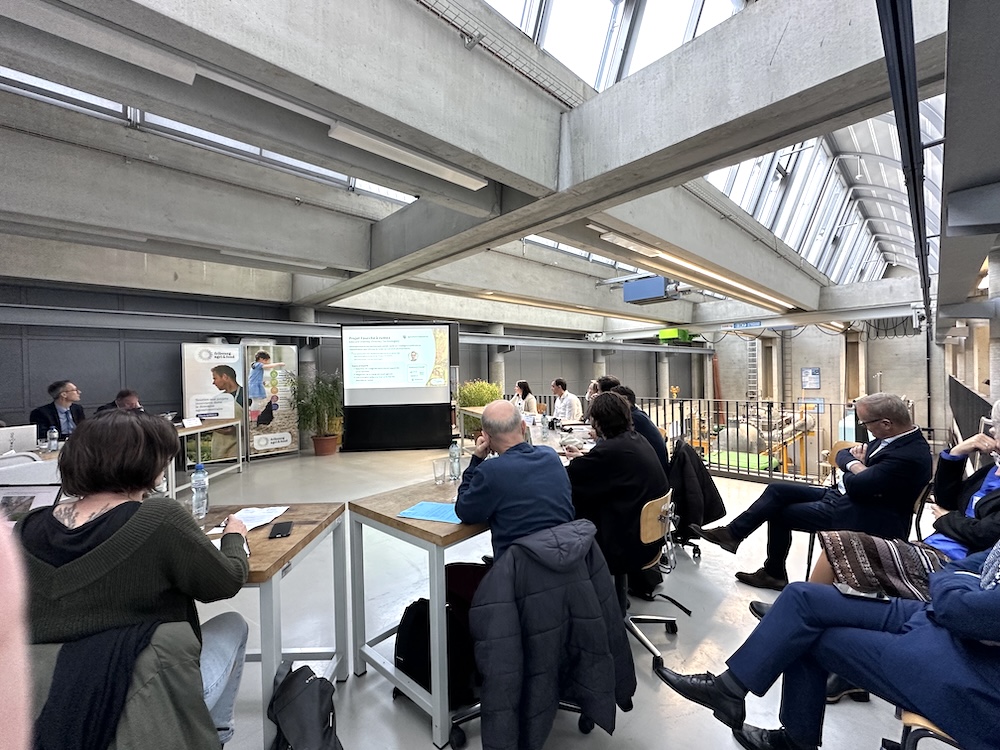
Our round table event – attended by Nadine Lacroix Oggier, Cluster Manager at Cluster Food & Nutrition, Camille Bossel, Co-Founder and COO at FoodHack, Ingeborg Gasser-Kriss, Co-Director at the Founder Institute Food Ecosystems Accelerator, Katka Letzing, CEO and Co-Founder at Kickstart Innovation, Matthew Lashmar, Managing Director at Masschallenge, Lucas Grob, Innovation Manager at Swiss Food Research and Christine Gould, CEO at Thought for Food – was designed to explore these questions and consider how the Swiss Food and Nutrition Valley can help to maximize the reach and impact of these organizations’ work in 2022.
What we heard
A round of introductions helped to identify synergies and potential areas for collaboration. Although each partner has a unique offer and approach, it soon became clear that many attendees also faced similar challenges and opportunities in their work.
Everyone agreed that Switzerland has a really strong offer for attracting international talent – from leading universities and research institutions to the sheer breadth of funding opportunities available. But there is also more we can do in terms of communicating our offer at a national level and ensuring that we retain talent as startups grow and scale.
Christina presented the idea of an “Ecosystem Navigator” – a platform that provides startups with a clear overview of the package of support that Switzerland can offer as a food nation. This would also mean that ecosystem actors are better placed to make the most of existing initiatives, like international startup tours.
The event drew to a close with a brainstorming session. Attendees were invited to share their thoughts on what an Ecosystem Navigator could look like in practice, identify needs and leads per organisation and vote on the key opportunities for collaboration in 2022.
What happens next?
The SFNV team has pulled together the learnings from the sesssion and we look forward to working with attendees to define the next steps. As a starting point, the SFNV team will be connecting with each of the participants to understand their key communication and project milestones for 2022 and consider how we can collaborate to strengthen their joint reach across their existing communities.
Do you work in an accelerator or startup promotion organisation and would you like to be involved in these discussions? Reach out to SFNV team.
The page you requested could not be found. Try refining your search, or use the navigation above to locate the post.